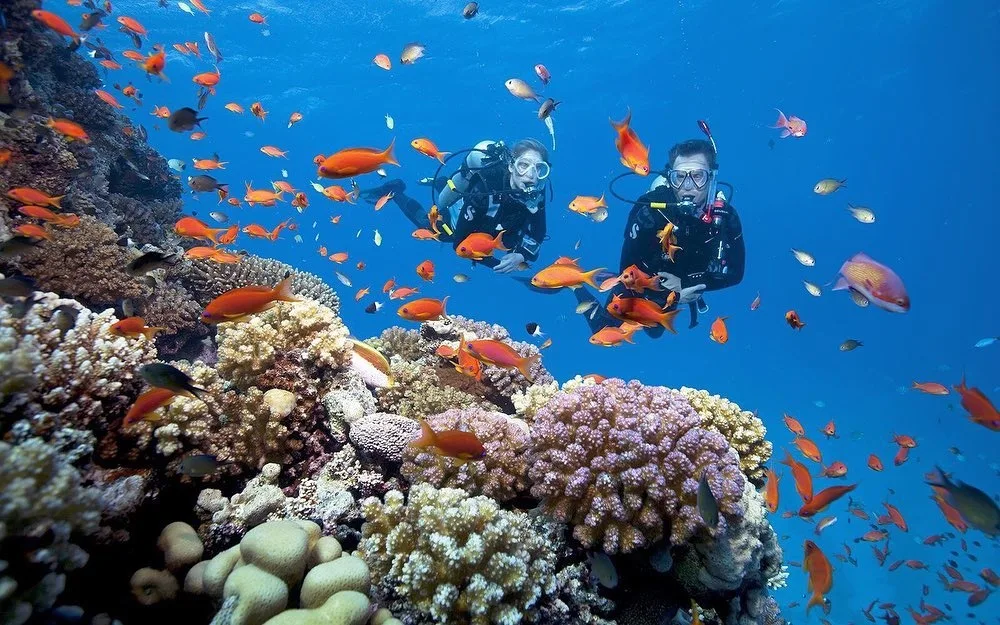

One morning in mid-June last year, I was floating on the sea at Hon Sup (Son Tra), face down through a slightly foggy mask. Beneath my feet, a school of small blue fish darted through a coral bush. It was beautiful, but I couldn’t help remembering two weeks prior, standing at Bai Xep in Cu Lao Cham, where the underwater visibility was so clear I could see a large grouper hiding behind a pale purple soft coral reef. Both are “snorkeling near Da Nang,” but the two experiences were distinctly different.
If you already know Da Nang and are wondering which place to try for your first dive this summer, this article will tell you from the perspective of someone who has tried both.
Son Tra: A diving experience for busy people
My first impression of Son Tra: fast. From a hotel in My Khe area to the pier is less than 20 minutes by car, and about 15 minutes on a speedboat to reach the diving spot. I left home at 7:30 AM and was back by 12:00 PM to have Da Nang fish cake noodles.
The three diving spots usually visited by tours are Hon Sup, Bai But, and Bai Nam, of which Bai Nam has the most beautiful coral and significantly more fish. The surrounding scenery is also a big plus: the lush green Son Tra peninsula and turquoise seawater are very photogenic, even when you’re just sitting on the boat and haven’t entered the water yet.
Tour prices range from 280k–390k/person for the basic package (snorkeling + water + instructor), or a combo of 4 activities (snorkeling + SUP + banana boat + jet ski) for about 300k- 440k. These are group tour rates for 8-12 people.
Practical pros I noticed: close, fast, cheap, and low travel effort. Instructors will stay close if you’re not a strong swimmer, and there are many fun side activities for groups of friends.
Cons I encountered: crowded on weekends—one Saturday, a group of 30 people were crowded in the main diving area. But it’s not an issue if you enjoy a lively atmosphere. Son Tra coral is mainly hard coral with average diversity. The water is slightly murkier than Cu Lao Cham, with visibility only around 3-4m.
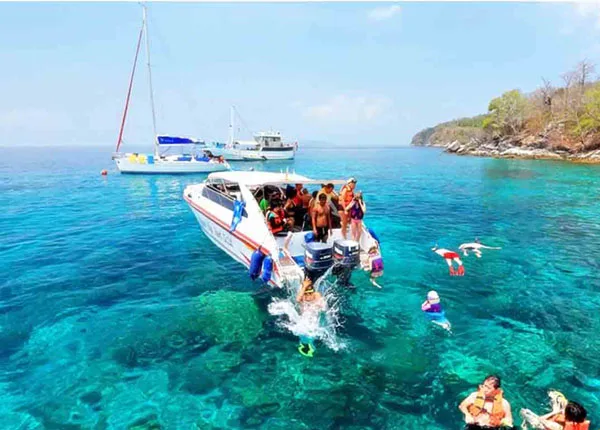
Cu Lao Cham: Witnessing living coral reefs, worth a whole day
I started at 8:00 AM, and 40 minutes later arrived at Bai Lang port. The atmosphere was already different—less exhaust, clearer water, fewer people. This was my second time at Cu Lao Cham, and this time I was determined to visit all 3 diving spots instead of just Bai Ong like the first time.
Four notable diving spots:
- Bai Xep (South of Hon Lao): colorful coral, 2–5m deep, ideal for beginners as you can see fish standing near the shore.
- Hon Tai (Hon Nhon): the quietest, lots of colorful soft coral, few tourists.
- Hon Dai: uninhabited, intact coral system, but not all tours visit here.
- Bai Ong: the most popular spot, allows for swimming, but is starting to get crowded and near-shore coral shows signs of decline.
The underwater feeling is completely different from Son Tra. Visibility is 5-7m. I could see a school of butterflyfish swimming over ten meters away. At Hon Tai, there were times I encountered a stretch of soft coral swaying with the waves like an underwater field. That’s a sight you’ll remember long after you return.
Tour price is 470k-560k for a 1-day snorkeling package including lunch. If you want scuba diving with a tank, add 850k-950k/person. Compared to Son Tra, the total cost is 1.5 to 2 times higher if you include food and travel to Cua Dai (Hoi An).
Cons: heavily weather-dependent, as trips are canceled if the sea reaches level 6 or higher. You must wake up very early (5:30 AM if starting from Da Nang). And if you get seasick, 40 minutes on a speedboat can be a challenge.
A Comparison of 5 Key Criteria
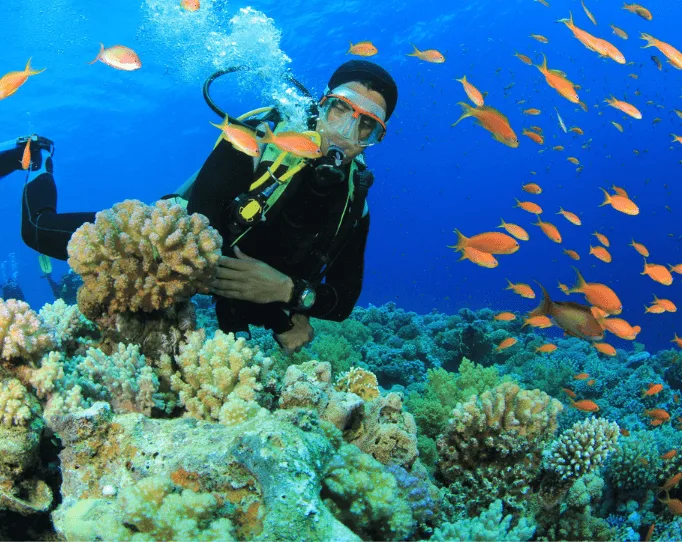
Coral Quality: Cu Lao Cham wins clearly
There are both hard and soft corals here, with fish density 2–3 times higher. Son Tra is also beautiful but mainly features more monotonous hard coral.
Convenience: Son Tra wins hands down
You can book just one day in advance, depart within 20 minutes, and be back in time for dinner. Cu Lao Cham requires planning from the night before: booking the tour, booking a car to Cua Dai, and preparing a quick breakfast.
Total Cost: Son Tra is half the price
About 400k is enough for Son Tra. For Cu Lao Cham, if going from Da Nang, including car and lunch on the island, it costs 800k-1 million/person. Twice the difference.
For First-Timers: Bai Xep is superior
Bai Xep (Cu Lao Cham) has very shallow water, friendly fish, and instructors who stay very close. Son Tra is also fine, but sometimes it’s too crowded for instructors to watch everyone individually.
Trip Atmosphere: Two different “types”
Son Tra is “taking advantage of a morning to have something to show on Instagram.” Cu Lao Cham is “a day out on the island, coming back tired but with lasting memories.” These are two different types of trips in essence, not just different locations.
Local Tips You Might Not Know
Best time for Summer 2026: From early May to mid-July. In late July and August, South winds strengthen, the water starts to get murky, and visibility drops significantly. April is also fine, but the water is still a bit cold for people from the South.
Choose the 8:00 AM trip instead of the afternoon. Early morning water is calm and visibility is much clearer. Afternoons often have South winds blowing, causing ripples and making the water murky.
For Cu Lao Cham: When booking a tour, ask directly if they go to Hon Tai. Cheap 440k tours usually only stop at Bai Ong where the coral is deteriorating due to overcrowding. Hon Tai usually requires extra money or a small VIP group tour, but it’s worth it.
For Son Tra: Contact services in the Bai Rang area directly rather than large group tours departing from the Han River. Smaller groups, clearer water, and no crowding.
Seasickness: Take medicine 30 minutes before boarding. Cu Lao Cham waves are light in summer, but 40 minutes is still enough to make some people quite tired.
So, which one should we choose?
If you only have half a day free, are traveling with people who don’t want to take risks, or this is your first time trying diving, choose Son Tra.
If you have a whole day, can handle waking up early, and want to see truly vibrant coral, choose Cu Lao Cham.
I usually tell my friends when they ask: “If it’s your first time in Da Nang, try Son Tra; if you like it, upgrade to Cu Lao Cham next time.” Both are worth experiencing and bring many different emotions.